
Glazing Ratio Strategies Explained
Glazing Ratio Strategies Explained
This article explains what the strategies in the Glazing Ratio feature are comprised of, specifically:
What the different glass types are and their assumed properties.
What "metal - broken", "metal - unbroken" and "non-metal" frames are.
What "partial", "substantial" and "extensive" shading is.
What "basic", "good" and "great" glazing solar control is.
Related articles:
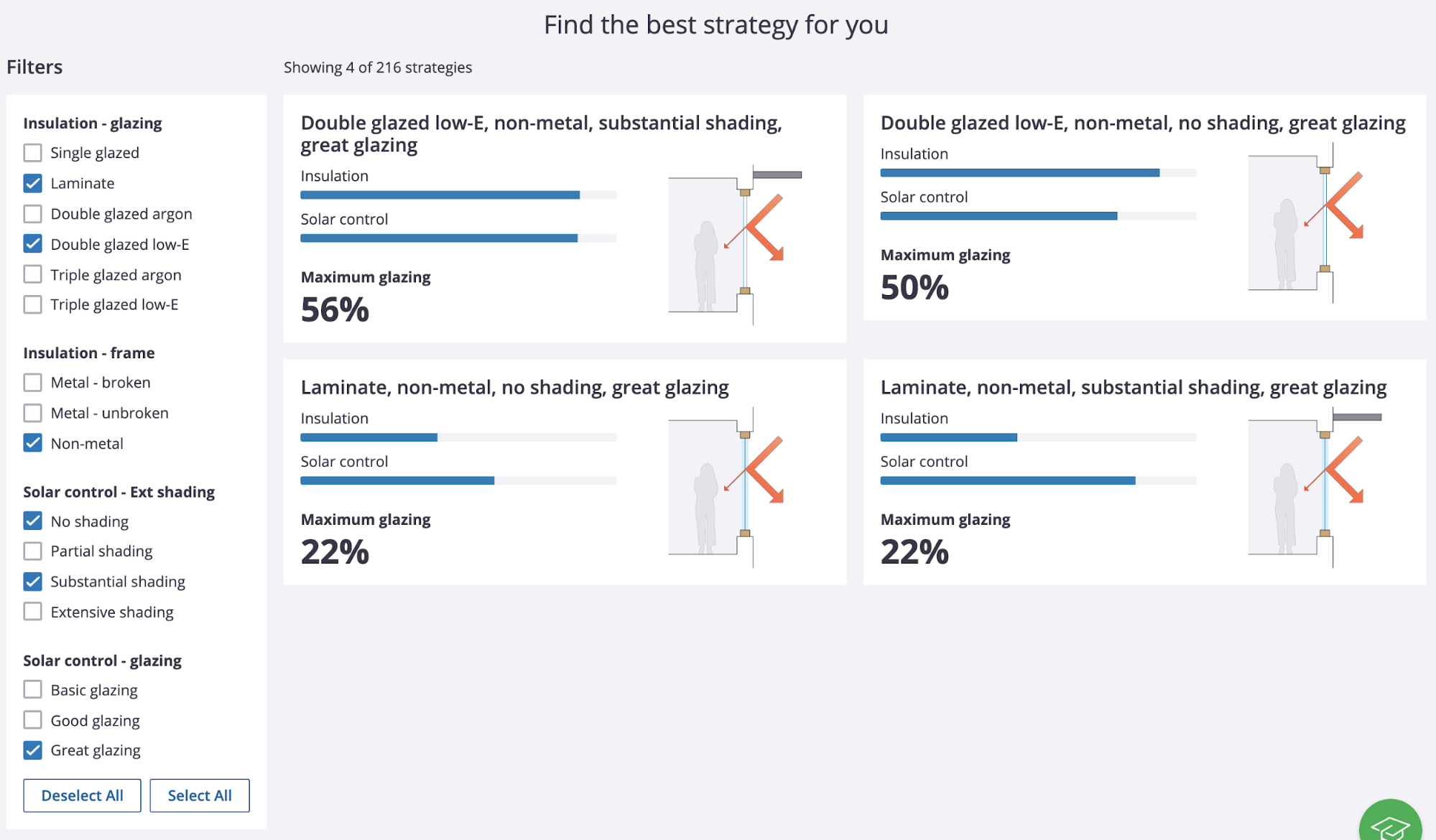
These strategies are found in the glazing ratio feature (see example below).
Why we've used generic names for strategy components.
This feature aims to help associate a recommended maximum amount of glazing by orientation with different facade strategies that might be employed to improve facade performance.
At PreDesign, most projects will not know what specific products they will use. However for many projects, budgeting from the start is important. These strategies can be used to help get a broad idea of the cost and aesthetic implications of using different amounts of glazing on different orientations.
One way to use this feature is to identify what you would need for the target glazing ratio and then use this information to create an outline set of requirements / briefing specification by orientation for your facade.
How we broke up the facade components
The facade assembly is broken up into 4 elements in this feature.
Elements affecting the glazing assembly insulation:
Glazing type
Frame type
Elements affecting the glazing assembly solar control:
Shading type
Glazing solar control
Why isn't infiltration considered here?Infiltration is the phenomenon of air leaking into and out of the building through the facade, which can contribute to heat gain, heat loss and humidity issues. Generally speaking the amount of glazing you have is not associated with the infiltration rate, which is why it's not covered here.
What the assembly looks like
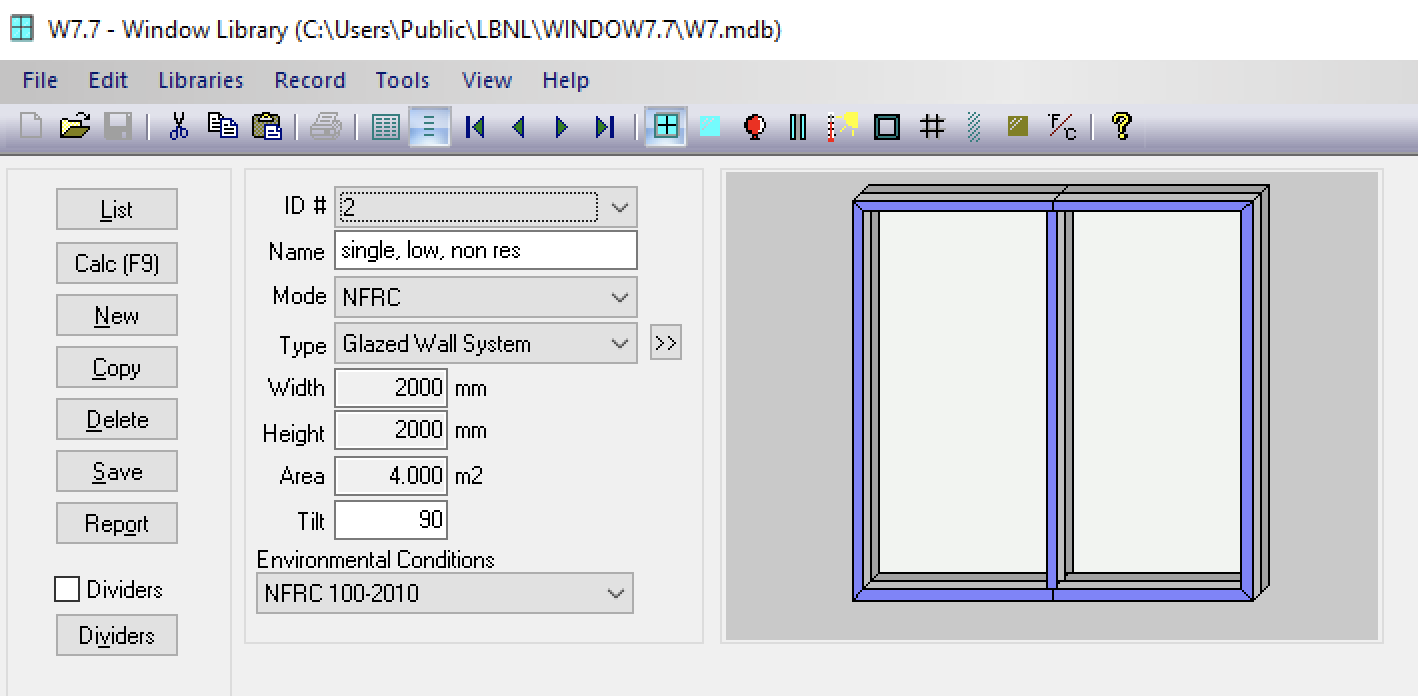
We've used real products to create assemblies that attempt to mimic in a generic way how a design might work. The assembly includes a frame and the assembly properties were calculated using LBNL's Window 7.7 software.
Glazing Types
We characterise 6 different glazing types in the feature. The table below describes what is assumed in terms of properties and what other things (if any) it can be a proxy for (at pre- design).
Frame Types
We characterise 3 frame types in PreDesign. The table below describes what is assumed in terms of properties and what other things (if any) it can be a proxy for (at pre- design).
Shading Types
We characterise 4 shading types in PreDesign. The table below describes what is assumed in terms of properties and what other things (if any) it can be a proxy for (at pre- design).
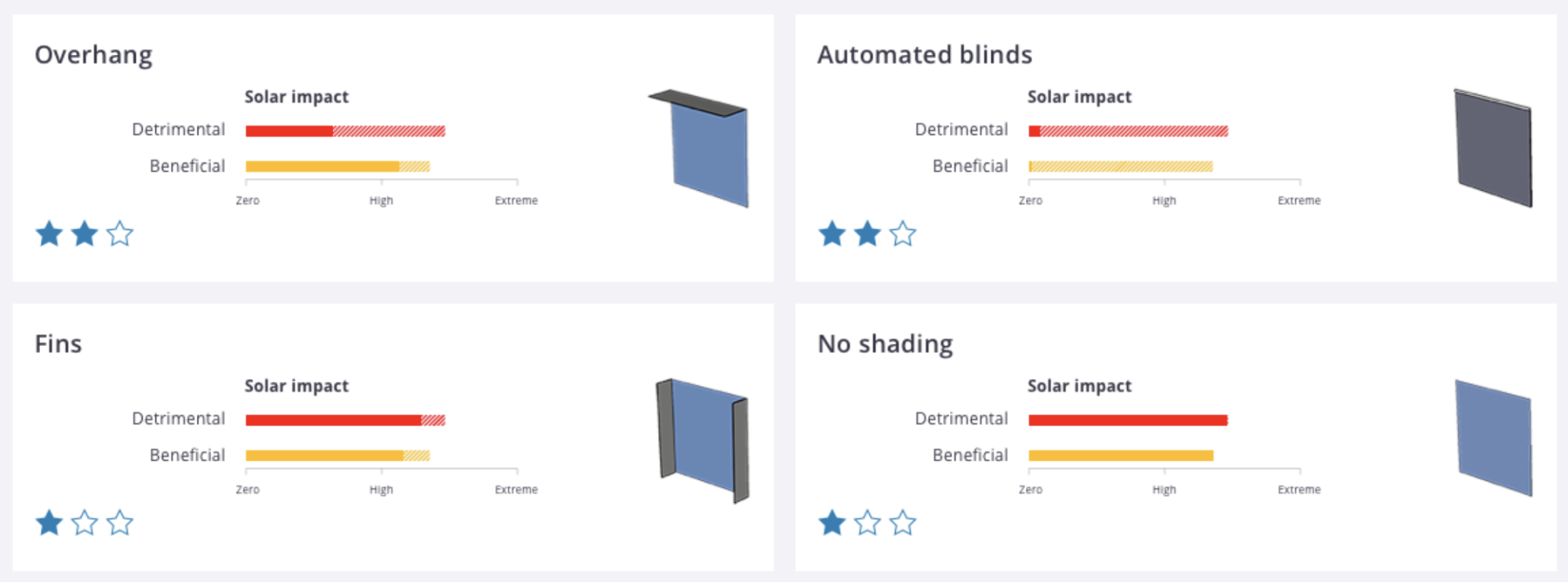
For example, the image below shows 4 different shading strategies on the south facade of a building in Boulder, Colorado.
Automated Blinds block more than 75% of overheating sun, so it is considered an extensive shading strategy for this facade.
Overhang blocks over 50% of overheating sun, so it's considered a substantial shading strategy.
Fins and No shading block less than 25% of overheating sun, so both are considered to be equivalent to no shading.
Glazing solar control types
We characterise 3 types of glazing solar control in PreDesign.
Glazing Solar Control is assessed relative to the glazing used. In other words, "great" solar control for single glazing (most likely some kind of heavy tint or frit) would still perform worse than a "basic" solar control level for a good low-e coating on a low-e double glazed unit.
This was done so the terms relate meaningfully to the unit as a whole.
The table below describes what is assumed in terms of SHGC (solar heat gain coefficient) for each glass type's "basic, good, best" option with a broken metal frame. Non-metal frames have slightly lower SHGC-values reflecting the thicker frame. Un-broken frames have higher values.
How you get an SHGC depends on the type of glass you're starting with, but strategies such as tinting, low-e coatings and fritting can all reduce the solar heat gain coefficient.